
 E-submission
 KSPEN
KSPEN KSSMN
KSSMN ASSMN
ASSMN JSSMN
JSSMNIndexed in:
Scopus, KCI, KoreaMed
Scopus, KCI, KoreaMed

Articles
- Page Path
- HOME > Ann Clin Nutr Metab > Volume 18(2); 2026 > Article
- Original Article Postoperative nausea and vomiting after emergent abdominal surgery in trauma patients in Korea: a multicenter retrospective observational study
-
Doo-Hun Kim1,2
 , Hoonsung Park1, Heejin Kim3, Jihyeon Ahn4, Mina Choi5, Dae-Sang Lee1, Tae Hwa Hong1, Hang Joo Cho1, Maru Kim1
 -
Annals of Clinical Nutrition and Metabolism 2026;18(2):138-144.
DOI: https://doi.org/10.15747/ACNM.26.0044
Published online: July 31, 2026
1Department of Trauma Surgery, Uijeongbu St. Mary’s Hospital, College of Medicine, The Catholic University of Korea, Seoul, Korea
2Armed Forces Trauma Center, Armed Forces Capital Hospital, Seongnam, Korea
3Department of Pharmacy, Uijeongbu St. Mary's Hospital, Uijeongbu, Korea
4Nutrition Team, Uijeongbu St. Mary's Hospital, Uijeongbu, Korea
5Nursing Team, Uijeongbu St. Mary's Hospital, Uijeongbu, Korea
- Corresponding author: Maru Kim, email: maru@catholic.ac.kr
• Received: January 31, 2026 • Revised: March 25, 2026 • Accepted: March 27, 2026
© 2026 The Korean Society of Surgical Metabolism and Nutrition · The Korean Society for Parenteral and Enteral Nutrition · Asian Society of Surgical Metabolism and Nutrition
This is an Open Access article distributed under the terms of the Creative Commons Attribution Non-Commercial License (http://creativecommons.org/licenses/by-nc/4.0), which permits unrestricted non-commercial use, distribution, and reproduction in any medium, provided the original work is properly cited.
- 423 Views
- 13 Download


Abstract
-
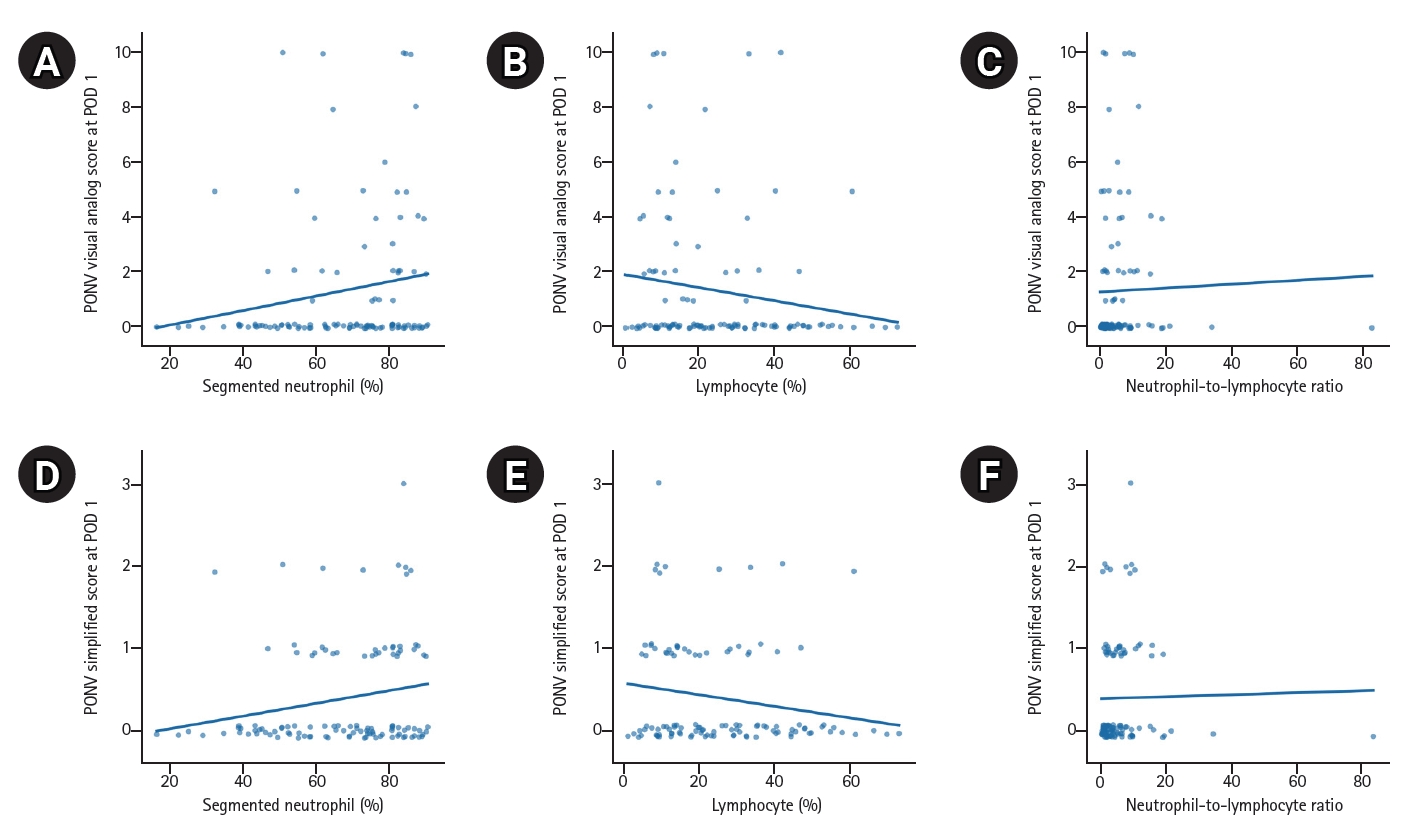
Purpose The present study aimed to assess the incidence and risk factors of postoperative nausea and vomiting (PONV) after emergency abdominal surgery in trauma patients.
-
Methods This retrospective observational study included trauma patients who underwent emergency abdominal surgery at two trauma centers between January 2024 and May 2025. Medical records were reviewed according to the occurrence of PONV.
-
Results A total of 114 patients were included in the analysis, of whom 35 patients (30.7%) developed PONV. Patients with a history of PONV had a higher incidence of PONV than those without such a history (80% vs. 28.4%; P=0.030). The lymphocyte percentage was lower in the PONV group (27.8% vs. 20.0%; P=0.023). In binary logistic regression analysis, previous PONV (B=2.469, P=0.033; odds ratio [OR], 11.807; 95% confidence interval [CI], 1.224–113.897) and lymphocyte percentage (B=−0.034, P=0.021; OR, 0.967; 95% CI, 0.939–0.995) were significant risk factors. PONV severity was also associated with a higher segmented neutrophil percentage, a higher neutrophil-to-lymphocyte ratio, and a lower lymphocyte percentage.
-
Conclusion The incidence of PONV was 30.7%. Previous PONV and a lower lymphocyte percentage were identified as risk factors for PONV after emergency abdominal surgery in trauma patients. Further studies are needed to develop strategies for reducing PONV in this population.
Graphical abstract
Introduction
Since Henrik Kehlet introduced the concept of Enhanced Recovery After Surgery (ERAS), ERAS has been widely adopted across surgical specialties [1]. ERAS protocols aim to improve patient outcomes by standardizing several areas of perioperative care and typically include preoperative, intraoperative, and postoperative components delivered through a multidisciplinary team approach. Reduction of postoperative nausea and vomiting (PONV) is a common component of ERAS protocols in both elective and emergency surgery [2-5].
PONV is a common postoperative complication. Its incidence has been reported to range from 10% to 50% and to increase to as high as 80% in high-risk populations [6-8]. To prevent and control PONV, current recommendations include minimizing nitrous oxide and volatile anesthetics, reducing opioid use, and administering 5-HT3 receptor antagonists, corticosteroids, antihistamines, and other antiemetic agents [9]. However, opioid analgesics are commonly used for analgosedation in patients in the intensive care unit and may be required for pain control in severely injured patients [10]. Therefore, trauma patients may be vulnerable to PONV, and efforts to reduce PONV in this population are needed. However, evidence in this area remains limited.
This study aimed to describe the basic characteristics of PONV in trauma patients. A retrospective observational study using medical records was conducted to assess the incidence and risk factors of PONV after abdominal surgery in trauma patients.
Methods
Trauma patients who underwent emergency abdominal surgery at two trauma centers between January 2024 and May 2025 were included. For this analysis, emergency abdominal surgery was defined as any surgery involving the region from the diaphragm to the pelvis, including procedures for injuries to the abdominal wall, intraperitoneal organs, and retroperitoneal organs such as the pancreas, kidneys, and major vessels.
The Catholic University of Korea Uijeongbu St. Mary's Hospital Institutional Review Board approved this study (No. UC25RIDI0062), and the requirement for informed consent was waived because only deidentified data were used and no intervention was performed. All methods were conducted in accordance with relevant guidelines and regulations.
Patients who received prolonged mechanical ventilation for more than 48 hours, had psychiatric disorders or intellectual disability, died within 48 hours, or were younger than 18 years were considered unable to report PONV accurately and were excluded from the statistical analysis.
The research team investigated and recorded PONV occurring on the first postoperative day. Any nausea or vomiting that occurred on the first day after surgery was defined as PONV-positive and used for categorical analysis. PONV severity was assessed using a visual analog scale from 0 to 10 and a simplified scoring system: 0, none; 1, nausea without vomiting; 2, 1–2 vomiting episodes; and 3, 3 or more vomiting episodes. Patients with missing data were also excluded from the analysis.
Other clinical information, including medical history, injury severity, operative findings and related procedures, in-hospital mortality, and other morbidities, was reviewed. Initial vital signs and laboratory findings upon arrival at the trauma center were analyzed.
Patients were divided according to the occurrence of PONV, and their characteristics were compared. The independent t-test was used for continuous variables, and the Pearson chi-square test and the Fisher exact test were used for categorical variables. Binary logistic regression was performed to identify risk factors and calculate odds ratios (ORs). Parameters correlated with PONV severity were identified using Spearman correlation analysis. All statistical analyses were performed using IBM SPSS Statistics for Windows, version 25.0 (IBM Corp.). A P-value of less than 0.05 was considered statistically significant.
Results
A total of 155 trauma patients who underwent abdominal surgery at two trauma centers were identified during the study period. After application of the inclusion and exclusion criteria, 114 patients were included in the final statistical analysis; this process is summarized in the flowchart in Fig. 1. Six patients who underwent emergency abdominal surgery for diaphragmatic or flank hernias were initially included based on suspected acute traumatic pathology. However, operative findings demonstrated severe adhesions, suggesting a chronic etiology rather than acute trauma. Therefore, these cases were excluded from the final analysis because they were not considered to represent trauma-related surgical conditions. Overall, 35 patients (30.7%) developed PONV. By institution, the incidence of PONV was 5.6% (1/18) at one hospital and 35.4% (34/96) at the other hospital. Baseline characteristics were comparable between the two institutions, with no significant differences in age or sex distribution. Baseline characteristics and medical history are shown in Table 1. Patients with a history of PONV had a higher incidence of PONV than those without such a history (80% vs. 28.4%; P=0.030). Initial patient condition, laboratory findings, and injury severity are summarized in Table 2. The lymphocyte percentage was lower in the PONV group (27.8% vs. 20.0%; P=0.023).
In binary logistic regression analysis, previous PONV (B=2.469, P=0.033; OR, 11.807; 95% confidence interval [CI], 1.224–113.897) and lymphocyte percentage (B=−0.034, P=0.021; OR, 0.967; 95% CI, 0.939–0.995) were significant risk factors. No statistically significant parameters were identified in the operation-related variables or clinical outcomes, which are summarized in Tables 3 and 4.
Table 5 shows the results of the Spearman correlation analysis. Segmented neutrophil percentage and neutrophil-to-lymphocyte ratio (NLR) demonstrated significant positive correlations with PONV severity, whereas lymphocyte percentage was negatively correlated with PONV severity, suggesting that initial inflammation was related to PONV severity. These correlations are presented with scatterplots and trendlines in Fig. 2.
Discussion
The objective of this study was to determine the incidence and risk factors of PONV after abdominal surgery in trauma patients. The incidence of PONV was approximately 30%, and the identified risk factors were a history of PONV and a lower lymphocyte percentage. PONV severity was correlated with the initial severity of inflammation. Because this topic has rarely been investigated, these findings may provide a useful basis for further research.
The overall incidence of PONV after abdominal surgery in trauma patients was similar to that reported in previous studies [7,8]. Opioids, which are well-known risk factors for PONV, were administered to almost all patients (98.2%). In addition, 5-HT3 receptor antagonists, which can be used for both prophylaxis and treatment of PONV, were used in 102 patients (89.5%). However, because this was a retrospective observational study, the type of perioperative medication, indication, timing of administration, and duration of treatment were determined by the clinical judgment of each surgeon and anesthesiologist and were not standardized. These variables may have acted as confounding factors for PONV, and the inability to control for them is a limitation of this study. Additionally, 5-HT3 receptor antagonists, other perioperative antiemetics, and anesthetic methods were not included in the statistical analysis. Further well-controlled studies of PONV management are required.
The relatively small number of enrolled patients should be considered when interpreting the results of this study. Initial vital signs, injury severity, operative methods, and PONV incidence differed between the two participating institutions. However, one institution performed fewer than 20 surgeries during a study period of more than 1 year, which limited statistical analysis. Previous PONV, a known risk factor for PONV, was also identified as a risk factor in this study. However, other known risk factors, such as current smoking, were not statistically significant. Multicenter studies can strengthen statistical power by collecting cases with diverse characteristics. In particular, multicenter studies may be useful for investigating uncommon clinical scenarios, such as trauma patients undergoing emergency abdominal surgery. Nevertheless, the number of cases in this study was relatively small. Further analyses in larger populations are needed to validate these risk factors.
Another significant risk factor was a lower lymphocyte percentage. Along with segmented neutrophil percentage and NLR, lymphocyte percentage was correlated with PONV severity. NLR, in particular, is an indicator of systemic inflammation and has been reported as a risk factor for PONV. Yildiz Altun et al. [11] reported that NLR was a risk factor for PONV in patients after septorhinoplasty. Arpaci et al. [12] used NLR to guide metoclopramide administration. Dexamethasone has also been reported to reduce the incidence of PONV [13,14]. Further analyses of dexamethasone and other anti-inflammatory drugs for PONV management in trauma patients are warranted.
This study assessed the incidence and risk factors of PONV after abdominal surgery in trauma patients. The incidence of PONV was 30.7%. Previous PONV and a lower lymphocyte percentage were associated with PONV. Further research is needed to improve the understanding of PONV and patient outcomes in this population.
Authors’ contribution
Conceptualization: MK, HK, JA. Data curation: DHK, HP, MK, DSL, THH, HJC. Formal analysis: MK. Funding acquisition: DHK, MK. Investigation: DHK, HK, JA, MK. Methodology: HP, MK. Resources: DHK, MC. Supervision: MK. Validation: DL, HTH, HJC. Writing–original draft: DHK, HP, MK. Writing–review & editing: HK, JA, MC, DSL, THH, MK, HJC. All authors read and approved the final manuscript.
Conflict of interest
The authors have no conflicts of interest regarding the publication of this article.
Funding
This study was supported by a research grant from the Korean Society of Surgical Metabolism and Nutrition (KSSMN).
Data availability
The raw data supporting the conclusions presented in this article will be made available by the authors upon request.
Acknowledgments
None.
Supplementary materials
None.
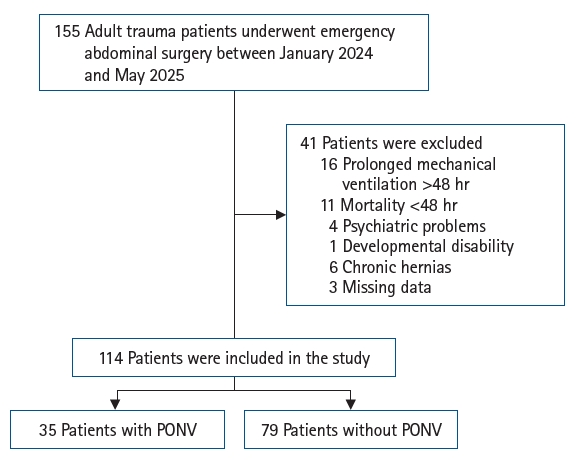
Fig. 2.
Correlations between PONV severity and inflammatory markers. PONV, postoperative nausea and vomiting; POD, postoperative day.
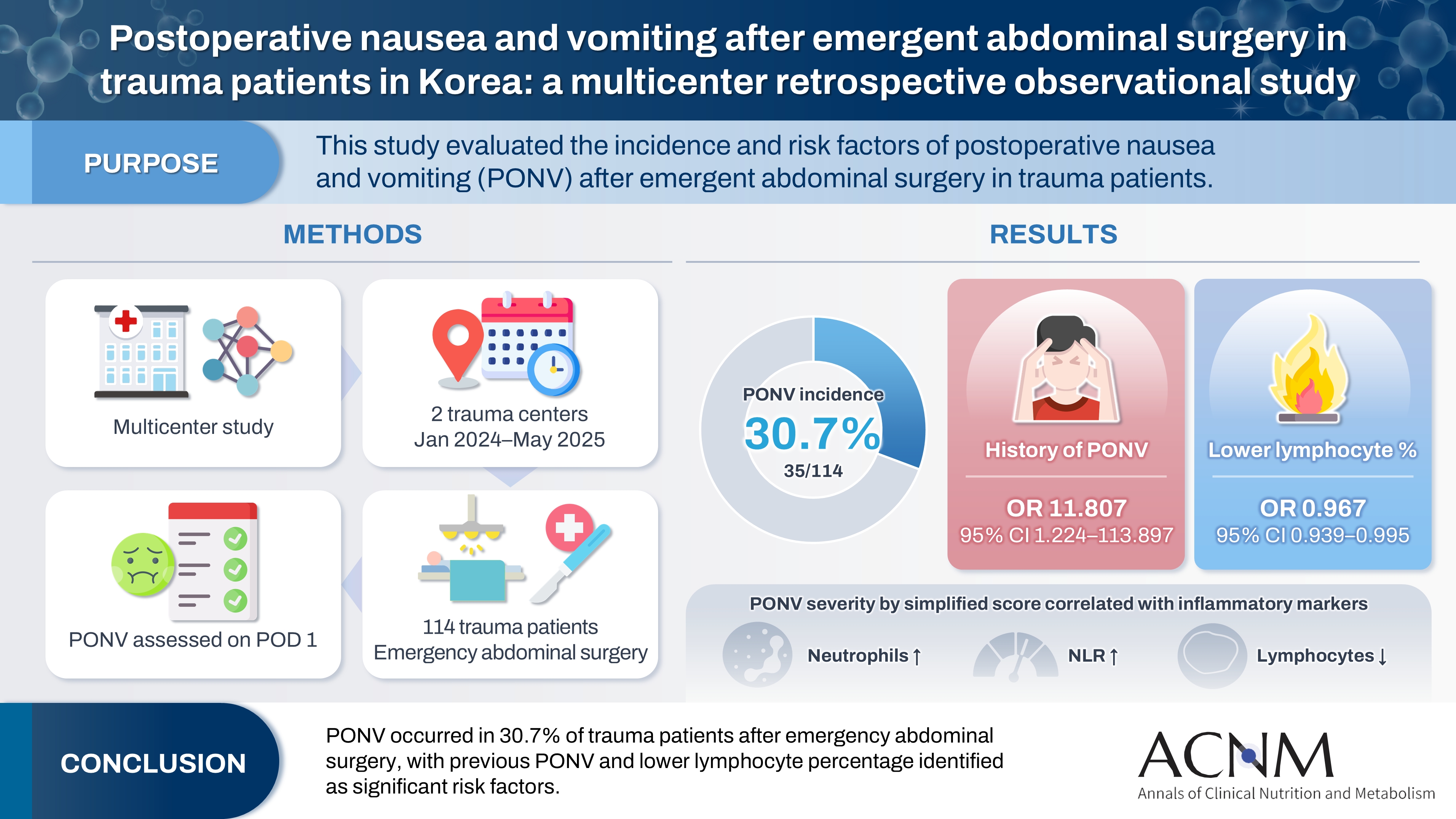
Table 1.
Baseline characteristics and past history
Table 2.
Parameters reflecting initial condition and injury severity
Values are presented as mean±SD or number (%). Abbreviated Injury Scores for Head and Neck, Face, Chest, Abdomen, Extremity, and External are presented.
NLR, neutrophil-lymphocyte ratio; INR, international normalized ratio; SD, standard deviation.
aResult of logistic regression analysis: Lymphocyte percent (B=–0.034, P=0.021, odds ratio [95% confidence interval]=0.967 [0.939–0.995]).
Table 3.
Operation-related information
Table 4.
Clinical outcomes
Table 5.
Parameters correlated to the severity of postoperative nausea and vomiting
| Segmented neutrophils (%) | Lymphocyte (%) | NLR | ||||
|---|---|---|---|---|---|---|
| r | P-value | r | P-value | r | P-value | |
| VAS | 0.226 | 0.016 | –0.214 | 0.022 | 0.214 | 0.022 |
| Simplified score | 0.213 | 0.023 | –0.205 | 0.029 | 0.204 | 0.030 |
- 1. Golder HJ, Papalois V. Enhanced Recovery After Surgery: history, key advancements and developments in transplant surgery. J Clin Med 2021;10:1634.ArticlePubMedPMC
- 2. Hardcastle TC, Gaarder C, Balogh Z, D'amours S, Davis KA, Gupta A, et al. Guidelines for Enhanced Recovery After Trauma and Intensive Care (ERATIC): Enhanced Recovery After Surgery (ERAS) and International Association for Trauma Surgery and Intensive Care (IATSIC) Society Recommendations: Paper 2: Postoperative and Intensive Care Recommendations. World J Surg 2025;49:2029-54. ArticlePubMedPMC
- 3. Scott MJ, Aggarwal G, Aitken RJ, Anderson ID, Balfour A, Foss NB, et al. Consensus guidelines for perioperative care for emergency laparotomy Enhanced Recovery After Surgery (ERAS®) Society recommendations part 2—emergency laparotomy: intra- and postoperative care. World J Surg 2023;47:1850-80. ArticlePubMedPMC
- 4. Gustafsson UO, Rockall TA, Wexner S, How KY, Emile S, Marchuk A, et al. Guidelines for perioperative care in elective colorectal surgery: Enhanced Recovery After Surgery (ERAS) Society recommendations 2025. Surgery 2025;184:109397.ArticlePubMed
- 5. Joliat GR, Kobayashi K, Hasegawa K, Thomson JE, Padbury R, Scott M, et al. Guidelines for perioperative care for liver surgery: Enhanced Recovery After Surgery (ERAS) Society recommendations 2022. World J Surg 2023;47:11-34. ArticlePDF
- 6. Chen J, Yang T, Cao S, Zheng X, Tian H, Chen Y, et al. Prevalence and time course of postoperative nausea and vomiting and severe pain in patients under general anesthesia with patient-controlled intravenous analgesia. Heliyon 2024;10:e25160.Article
- 7. Amirshahi M, Behnamfar N, Badakhsh M, Rafiemanesh H, Keikhaie KR, Sheyback M, et al. Prevalence of postoperative nausea and vomiting: a systematic review and meta-analysis. Saudi J Anaesth 2020;14:48-56. Article
- 8. Huh H. Postoperative nausea and vomiting in spinal anesthesia. Korean J Anesthesiol 2023;76:87-8. ArticlePubMedPMCPDF
- 9. Gan TJ, Belani KG, Bergese S, Chung F, Diemunsch P, Habib AS, et al. Fourth consensus guidelines for the management of postoperative nausea and vomiting. Anesth Analg 2020;131:411-48. ArticlePubMed
- 10. Seo Y, Lee HJ, Ha EJ, Ha TS. 2021 KSCCM clinical practice guidelines for pain, agitation, delirium, immobility, and sleep disturbance in the intensive care unit. Acute Crit Care 2022;37:1-25. ArticlePubMedPMCPDF
- 11. Yildiz Altun A, Demirel I, Bolat E, Ozcan S, Altun S, Aksu A, et al. The relationship between the preoperative neutrophil-to-lymphocyte ratio and postoperative nausea and vomiting in patients undergoing septorhinoplasty surgery. Aesthetic Plast Surg 2019;43:861-5. ArticlePubMedPDF
- 12. Arpaci AH, Isik B, Ilhan E, Erdem E. Association of postoperative nausea and vomiting incidence with neutrophil-lymphocyte ratio in ambulatory maxillofacial surgery. J Oral Maxillofac Surg 2017;75:1367-71. ArticlePubMed
- 13. Chen J, He Y, Deng T, Li Y, Wang X, Zhao M, et al. Effects of dexamethasone on nausea, vomiting, and inflammatory indexes after total knee arthroplasty. Orthop Surg 2025;17:2862-8. ArticlePubMedPMC
- 14. Ho CM, Wu HL, Ho ST, Wang JJ. Dexamethasone prevents postoperative nausea and vomiting: benefit versus risk. Acta Anaesthesiol Taiwan 2011;49:100-4. ArticlePubMed
References
Figure & Data
REFERENCES
Citations
Citations to this article as recorded by 
 Cite
Cite XML Download
- Figure
-
Postoperative nausea and vomiting after emergent abdominal surgery in trauma patients in Korea: a multicenter retrospective observational study
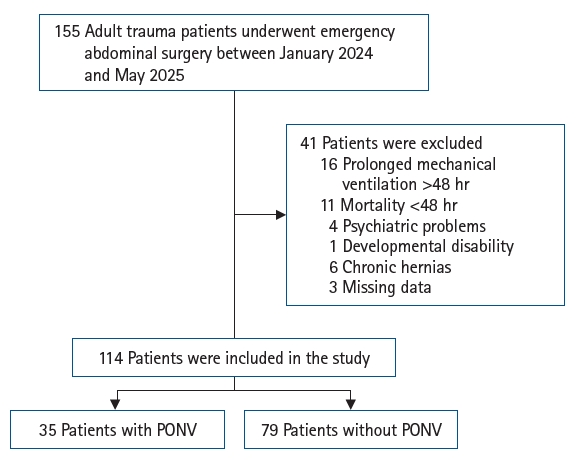
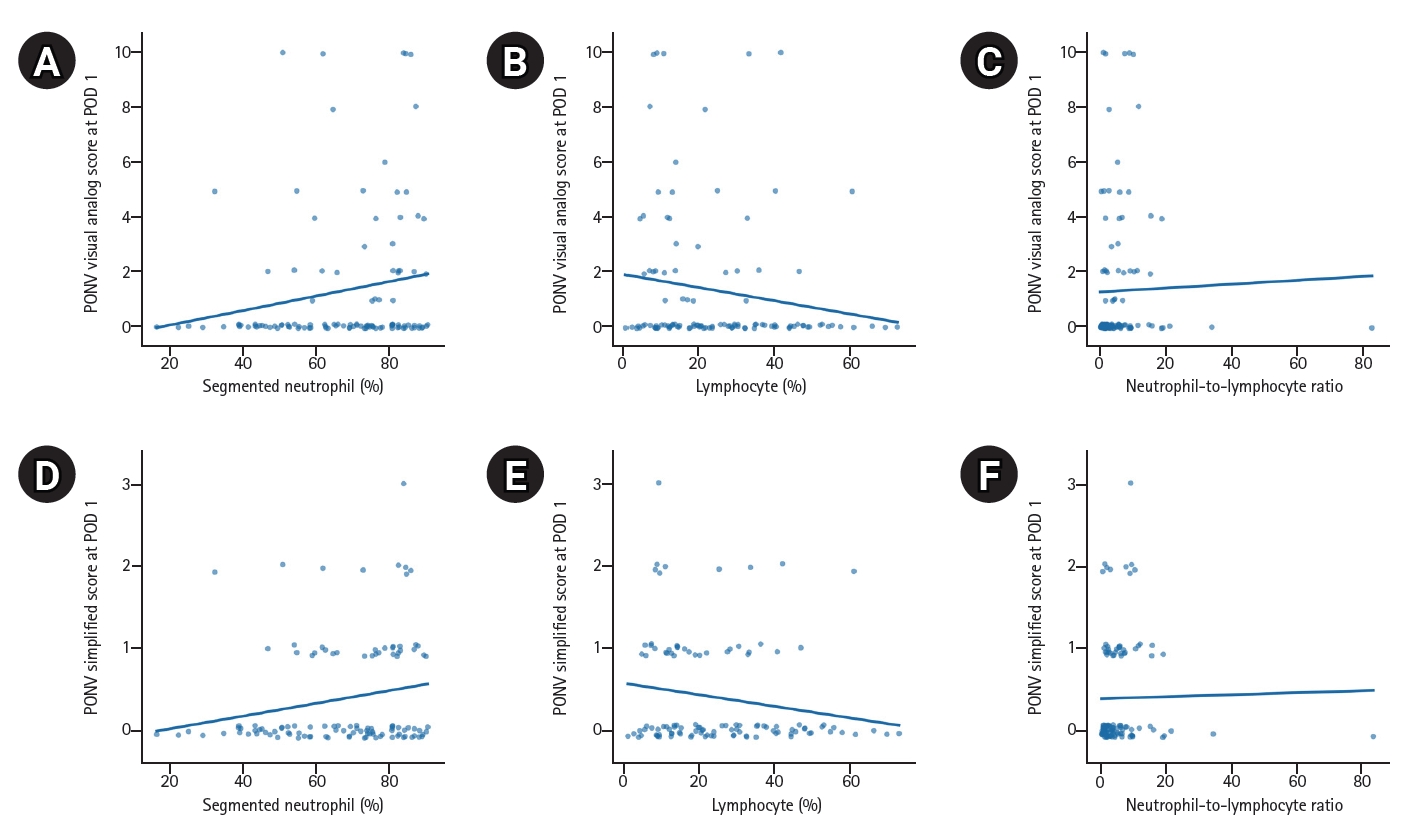
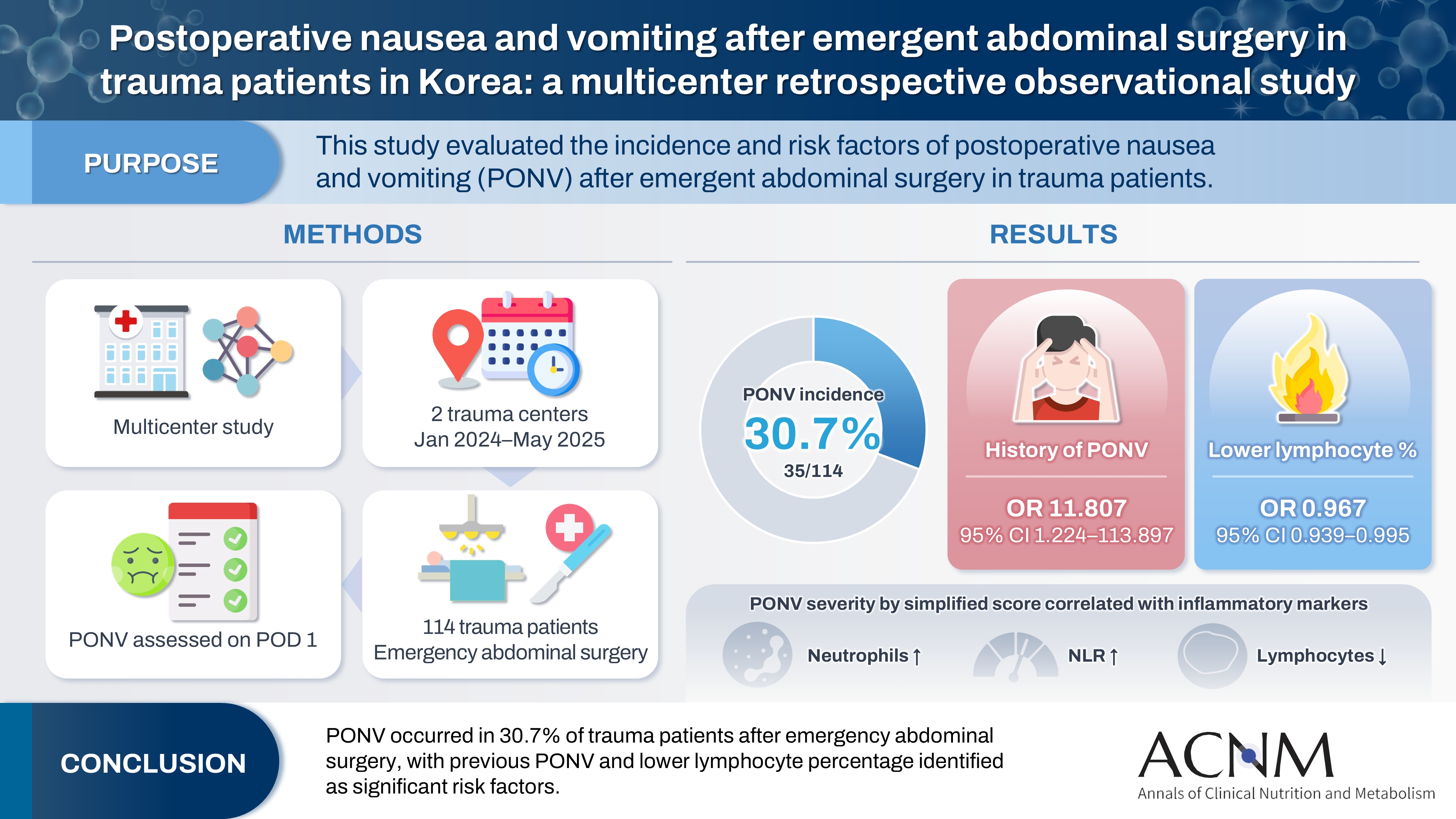
Fig. 1. Flowchart of inclusion and exclusion in the study. PONV, postoperative nausea and vomiting.
Fig. 2. Correlations between PONV severity and inflammatory markers. PONV, postoperative nausea and vomiting; POD, postoperative day.
Graphical abstract
Fig. 1.
Fig. 2.
Graphical abstract
Postoperative nausea and vomiting after emergent abdominal surgery in trauma patients in Korea: a multicenter retrospective observational study
| Variable | Postoperative nausea and vomiting | P-value | ||
|---|---|---|---|---|
| Negative (n=79) | Positive (n=35) | |||
| Age (yr), mean±SD | 55.5±17.9 | 55.0±16.1 | 0.879 | |
| Sex | Male | 50 (71.4) | 20 (28.6) | 0.534 |
| Female | 29 (65.9) | 15 (34.1) | ||
| Previous postoperative nausea and vomitinga | No | 78 (71.6) | 31 (28.4) | 0.030 |
| Yes | 1 (20.0) | 4 (80.0) | ||
| Current smoker | No | 31 (70.5) | 13 (29.5) | 0.832 |
| Yes | 48 (68.6) | 22 (31.4) | ||
| Hypertension | No | 56 (70.0) | 24 (30.0) | 0.803 |
| Yes | 23 (67.6) | 11 (32.4) | ||
| Diabetes | No | 62 (69.7) | 27 (30.3) | 0.873 |
| Yes | 17 (68.0) | 8 (32.0) | ||
| Liver cirrhosis | No | 78 (69.0) | 35 (31.0) | >0.999 |
| Yes | 1 (100.0) | 0 | ||
| Chronic kidney disease | No | 79 (69.3) | 35 (30.7) | NA |
| Yes | 0 | 0 | ||
| Variable | Postoperative nausea and vomiting | P-value | |
|---|---|---|---|
| Negative (n=79) | Positive (n=35) | ||
| Glasgow Coma Score | 14.0±2.8 | 14.4±2.2 | 0.432 |
| Systolic blood pressure (mmHg) | 110.3±32.8 | 105.8±29.1 | 0.483 |
| Pulse rate (beats/min) | 88.9±24.1 | 82.3±15.5 | 0.086 |
| Initial intubation | |||
| No | 53 (71.6) | 21 (28.4) | |
| Yes | 26 (65.0) | 14 (35.0) | |
| Initial vasopressor | 0.052 | ||
| No | 33 (80.5) | 8 (19.5) | |
| Yes | 46 (63.0) | 27 (37.0) | |
| Hemoglobin (g/dL) | 12.8±2.3 | 12.6±2.3 | 0.536 |
| White blood cell count (/μL) | 12,481±5,259 | 13,130±7,247 | 0.591 |
| Segmented neutrophils (%) | 66.4±20.7 | 73.9±14.3 | 0.056 |
| Lymphocyte (%)a | 27.8±17.7 | 20.0±13.8 | 0.023 |
| NLR | 5.8±10.5 | 6.2±4.7 | 0.800 |
| Platelet (/μL) | 243,329±76,227 | 233,486±84,039 | 0.539 |
| Blood urea nitrogen (mg/dL) | 16.4±11.9 | 16.0±5.5 | 0.816 |
| Creatinine (mg/dL) | 1.0±0.6 | 1.0±0.3 | 0.680 |
| Albumin (g/dL) | 4.0±0.6 | 3.9±0.6 | 0.352 |
| INR | 1.1±0.1 | 1.0±0.1 | 0.509 |
| Head and neck | 0.7±1.2 | 0.7±1.0 | 0.960 |
| Face | 0.2±0.5 | 0.1±0.4 | 0.372 |
| Chest | 1.4±1.5 | 1.7±1.6 | 0.302 |
| Abdomen | 2.7±1.1 | 2.8±1.1 | 0.552 |
| Extremity | 1.1±1.7 | 1.2±1.5 | 0.892 |
| External | 0.6±0.6 | 0.5±0.6 | 0.942 |
| Injury severity score | 17.7±12.5 | 19.4±11.7 | 0.497 |
| Major trauma | 0.380 | ||
| No | 34 (73.9) | 12 (26.1) | |
| Yes | 45 (66.2) | 23 (33.8) | |
| Variable | Postoperative nausea and vomiting | P-value | ||
|---|---|---|---|---|
| Negative (n=79) | Positive (n=35) | |||
| Surgery type | Laparoscopic | 27 (75.0) | 9 (25.0) | 0.370 |
| Open/conversion | 52 (66.7) | 26 (33.3) | ||
| Damage control surgery | No | 54 (65.1) | 29 (34.9) | 0.108 |
| Yes | 25 (80.6) | 6 (19.4) | ||
| Combined operation other than abdomen | No | 67 (69.1) | 30 (30.9) | >0.999 |
| Yes | 12 (70.6) | 5 (29.4) | ||
| Intraabdominal adhesion | No | 75 (70.1) | 32 (29.9) | 0.674 |
| Yes | 4 (57.1) | 3 (42.9) | ||
| Transfusion within POD 1 | No | 52 (69.3) | 23 (30.7) | 0.991 |
| Yes | 27 (69.2) | 12 (30.8) | ||
| Opioid administration within POD 1 | No | 2 (100.0) | 0 | >0.999 |
| Yes | 77 (68.8) | 35 (31.3) | ||
| Variable | Postoperative nausea and vomiting | P-value | ||
|---|---|---|---|---|
| Negative (n=79) | Positive (n=35) | |||
| Superficial surgical site infection | No | 74 (68.5) | 34 (31.5) | 0.665 |
| Yes | 5 (83.3) | 1 (16.7) | ||
| Deep surgical site infection | No | 79 (69.3) | 35 (30.7) | NA |
| Yes | 0 | 0 | ||
| Organ space infection | No | 78 (69.0) | 35 (31.0) | >0.999 |
| Yes | 1 (100.0) | 0 | ||
| Delirium | No | 74 (67.9) | 35 (32.1) | 0.321 |
| Yes | 5 (100.0) | 0 | ||
| In-hospital mortality | No | 73 (67.6) | 35 (32.4) | 0.175 |
| Yes | 6 (100.0) | 0 | ||
| Segmented neutrophils (%) | Lymphocyte (%) | NLR | ||||
|---|---|---|---|---|---|---|
| r | P-value | r | P-value | r | P-value | |
| VAS | 0.226 | 0.016 | –0.214 | 0.022 | 0.214 | 0.022 |
| Simplified score | 0.213 | 0.023 | –0.205 | 0.029 | 0.204 | 0.030 |
Table 1. Baseline characteristics and past history
Values are presented as number (%) unless otherwise indicated. SD, standard deviation; NA, not available. aResult of logistic regression analysis: previous postoperative nausea and vomiting (B=2.469, P=0.033, odds ratio [95% confidence interval]=11.807 [1.224–113.897]).
Table 2. Parameters reflecting initial condition and injury severity
Values are presented as mean±SD or number (%). Abbreviated Injury Scores for Head and Neck, Face, Chest, Abdomen, Extremity, and External are presented. NLR, neutrophil-lymphocyte ratio; INR, international normalized ratio; SD, standard deviation. aResult of logistic regression analysis: Lymphocyte percent (B=–0.034, P=0.021, odds ratio [95% confidence interval]=0.967 [0.939–0.995]).
Table 3. Operation-related information
Values are presented as number (%). POD, postoperative day.
Table 4. Clinical outcomes
Values are presented as number (%). NA, not available.
Table 5. Parameters correlated to the severity of postoperative nausea and vomiting
NLR, neutrophil-lymphocyte ratio; r, correlation coefficient; VAS, visual analog score.


