
 E-submission
 KSPEN
KSPEN KSSMN
KSSMN ASSMN
ASSMN JSSMN
JSSMNIndexed in:
Scopus, KCI, KoreaMed
Scopus, KCI, KoreaMed

Articles
- Page Path
- HOME > Ann Clin Nutr Metab > Volume 18(2); 2026 > Article
- Review Article Mechanistic insights, clinical significance, and management strategies for postgastrectomy hypoglycemia in gastric cancer patients in the era of continuous glucose monitoring: a narrative review
-
Cheong Ah Oh

-
Annals of Clinical Nutrition and Metabolism 2026;18(2):117-126.
DOI: https://doi.org/10.15747/ACNM.25.0035
Published online: July 31, 2026
Department of Gastrointestinal Surgery, Asan Medical Center, Seoul, Korea
- Corresponding author: Cheong Ah Oh, email: cheongah.oh@amc.seoul.kr
• Received: October 5, 2025 • Revised: February 14, 2026 • Accepted: March 10, 2026
© 2026 The Korean Society of Surgical Metabolism and Nutrition · The Korean Society for Parenteral and Enteral Nutrition · Asian Society of Surgical Metabolism and Nutrition
This is an Open Access article distributed under the terms of the Creative Commons Attribution Non-Commercial License (http://creativecommons.org/licenses/by-nc/4.0), which permits unrestricted non-commercial use, distribution, and reproduction in any medium, provided the original work is properly cited.
- 587 Views
- 14 Download


Abstract
-
Purpose Postgastrectomy hypoglycemia (PGH) is increasingly recognized as a potential metabolic complication after gastrectomy for gastric cancer. This narrative review summarizes its clinical relevance, underlying mechanisms, and management strategies in the era of continuous glucose monitoring.
-
Current concept Traditionally considered part of the spectrum of late dumping syndrome, PGH arises from rapid nutrient transit, which leads to postprandial hyperglycemia followed by exaggerated insulin secretion and subsequent hypoglycemia. Emerging evidence suggests that glycemic disturbances after gastrectomy extend beyond symptomatic postprandial events to include asymptomatic and nocturnal hypoglycemia, as well as marked glycemic variability. Proposed mechanisms include postprandial hyperinsulinemia mediated by incretin hormones, particularly glucagon-like peptide-1, peptide YY, and glucose-dependent insulinotropic polypeptide. These disturbances may contribute to fatigue, impaired concentration, nutritional deterioration, and increased vulnerability to adverse events. Dietary modification, including frequent small meals emphasizing low–glycemic-index carbohydrates with adequate protein and fiber, remains the cornerstone of management. Pharmacologic interventions may be considered in refractory cases, although evidence specific to PGH remains limited and is often extrapolated from related conditions.
-
Conclusion PGH after gastrectomy for gastric cancer is an underrecognized but clinically meaningful metabolic disturbance. Greater awareness and individualized management are essential to mitigate long-term nutritional and functional consequences. Further research is needed to clarify its mechanisms and establish evidence-based management strategies.
Introduction
Gastric cancer remains one of the most common malignancies worldwide and a leading cause of cancer-related mortality [1]. Gastrectomy, usually performed with regional lymphadenectomy, remains the primary curative treatment for resectable disease. However, it inevitably causes profound anatomical and physiological changes, including loss of gastric reservoir capacity, impaired mechanical digestion, and accelerated gastric emptying [2].
Among the metabolic disturbances resulting from post-gastrectomy anatomical and physiological changes, postgastrectomy hypoglycemia (PGH) has emerged as a clinically significant but often underrecognized complication in gastric cancer patients. In this review, PGH refers to objectively documented hypoglycemia occurring after gastrectomy. Although it most commonly develops in the postprandial period, continuous glucose monitoring (CGM) has shown that hypoglycemia may also occur in asymptomatic or nocturnal settings, thereby expanding the recognized clinical spectrum.
In contrast, late dumping syndrome (LDS) is a symptom-based entity characterized by postprandial autonomic (adrenergic) and hypoglycemic manifestations triggered by rapid nutrient transit. It typically occurs 1–3 hours after meals because of accelerated glucose absorption and exaggerated insulin secretion [3-5]. LDS is a common postoperative complication after gastrectomy for malignant or benign disease, as well as after esophageal and bariatric (metabolic) surgery [6,7].
Although PGH and LDS share overlapping pathophysiological mechanisms, PGH is defined by objectively measured glucose decline regardless of symptom presence, whereas LDS is defined primarily by its clinical symptom constellation.
Accordingly, conventional dietary recommendations after gastrectomy have focused on mitigating abrupt postprandial hyperglycemia and subsequent hypoglycemia. These strategies include eating slowly, consuming smaller and more frequent meals, avoiding concomitant fluid intake, limiting simple sugars, and emphasizing protein, complex carbohydrates, and fiber [2].
The advent of CGM has broadened our understanding of PGH and suggests that post-gastrectomy glucose fluctuations may be more complex and clinically meaningful than previously appreciated. In gastric cancer patients, several studies have reported pronounced glycemic variability and persistent nocturnal hypoglycemia, as well as possible associations with postoperative malnutrition [2,6-8]. Importantly, PGH may also lead to severe, life-altering consequences, including hypoglycemia-related accidents, disability, and restrictions in daily and social functioning [9].
Despite these clinical implications, optimal approaches to prevention and management, particularly nutritional management, remain inadequately defined. This underscores the need for a comprehensive review of PGH in gastric cancer patients in the CGM era, including its clinical significance, underlying mechanisms, diagnostic advances, and management strategies, with the ultimate aim of improving patient outcomes and quality of life.
This review aims to clarify the clinical significance of PGH in patients undergoing gastrectomy for gastric cancer, including its often unrecognized nocturnal manifestations and potential persistence beyond the early postoperative period. By synthesizing current evidence, this review discusses its underlying mechanisms and available management strategies. CGM has broadened our understanding of the glycemic phenotype and may help identify patients at risk.
Methods
This was a literature-based study. Therefore, neither institutional review board approval nor informed consent was required.
This narrative review did not follow a formal systematic review protocol; however, efforts were made to enhance transparency in the literature selection process. A targeted PubMed search was conducted to identify relevant studies published through September 2025. Representative search terms included “postgastrectomy hypoglycemia,” “hypoglycemia after gastrectomy,” “continuous glucose monitoring,” “dumping syndrome,” and “gastric cancer.” The primary focus was on studies involving patients who underwent gastrectomy for gastric cancer. Clinical review articles, prospective and retrospective studies, and relevant case reports addressing hypoglycemia in this population were included. Titles and abstracts were screened for relevance, followed by full-text review when appropriate. Reference lists of selected articles were also reviewed manually to identify additional relevant studies.
Studies focusing exclusively on bariatric surgery populations were generally excluded; however, selected studies were considered when they provided mechanistic or therapeutic insights relevant to PGH. In total, seven key studies specifically addressing hypoglycemia in gastric cancer patients after gastrectomy were identified and informed the main discussion of this review. Additional literature on post-bariatric hypoglycemia (PBH) and dumping syndrome was also considered to provide a broader context for the pathophysiology and management strategies. For clarity, in this review, the term PGH refers exclusively to hypoglycemia occurring in patients with gastric cancer.
Current understanding of PGH
Before CGM was considered for its theranostic utility in PGH, the diagnosis of postprandial hypoglycemia relied primarily on detailed clinical history combined with biochemical confirmation of a plasma glucose level below 55 mg/dL [10]. Provocative testing, including the oral glucose tolerance test and mixed-meal tolerance test, was sometimes used [11], although these methods had limitations, including the risk of inducing severe hypoglycemia and the potential for false-positive results [12].
CGM provides a more comprehensive assessment by continuously recording interstitial glucose levels and capturing both postprandial excursions and nocturnal episodes over a 24-hour period. This approach enables clinicians to detect patterns that might otherwise go unrecognized, thereby offering deeper insight into the glycemic profile of post-gastrectomy patients [2]. In the cited study, CGM was performed using a sensor attached to the posterior aspect of the upper arm. The device continuously measured glucose concentrations in the subcutaneous interstitial fluid at 15-minute intervals for up to 14 days. Data stored in the sensor were transmitted wirelessly to the reader and subsequently analyzed using the manufacturer’s dedicated software [13].
Supporting this clinical utility, Ri et al. [14] demonstrated that CGM-based assessment enabled detection of asymptomatic hypoglycemia and clinically significant glycemic excursions, including postprandial spikes, in patients who had undergone gastrectomy for gastric cancer.
PGH has emerged as an increasingly recognized complication, largely because of its association with marked glycemic variability and frequent nocturnal hypoglycemia [2]. CGM studies by Kubota et al. [2,6] in gastric cancer patients showed that glycemic variability was more pronounced after gastrectomy than after local resection and worsened further at 1 year postoperatively compared with 1 month. They also reported that total gastrectomy was associated with more severe fluctuations and more prolonged nocturnal hypoglycemia than distal gastrectomy, reflecting the greater loss of gastric reservoir function.
These disturbances have consequences beyond transient discomfort. Glycemic variability and recurrent hypoglycemia may impair quality of life and are increasingly recognized as important in clinical studies, with growing evidence linking them to adverse long-term outcomes [2,15,16]. Several studies support this. For example, Nusca et al. [15] identified glycemic variability as an independent predictor of cardiovascular events in both diabetic and nondiabetic cohorts. Similarly, other studies have linked recurrent glucose fluctuations and hypoglycemia to cardiovascular disease, arrhythmias, cognitive decline, and dementia [8,17-20]. Evidence further indicates that blood glucose fluctuations may also contribute to sarcopenia, suggesting that their adverse effects extend beyond cardiovascular and neurological outcomes [21,22]. Although these studies involved different patient populations, the documented risks associated with glycemic variability and hypoglycemia suggest that patients with PGH may likewise be vulnerable to similar long-term complications, highlighting the importance of careful monitoring and management.
Particular concern arises from nocturnal hypoglycemia. Nishibeppu et al. [8] demonstrated that, in predominantly nondiabetic older adults with gastric cancer, hypoglycemia persisted for up to 1 year after gastrectomy, with nocturnal episodes being especially pronounced. Prolonged nocturnal hypoglycemia was more common in malnourished patients, underscoring its association with nutritional status.
Although evidence remains limited, the pathophysiology of PGH is thought to be multifactorial and may involve delayed metabolic consequences of the rapid nutrient transit characteristic of early dumping, along with additional alterations in hormonal, autonomic, and metabolic regulation. As described above, PGH is conceptualized here as a glucose-defined metabolic disturbance rather than a symptom-based syndrome such as LDS.
Early dumping is thought to occur when hyperosmolar nutrients enter the small intestine rapidly, potentially exceeding its absorptive capacity [23]. The resulting osmotic shift draws fluid from the vascular compartment into the intestinal lumen, leading to relative hypovolemia and cardiovascular manifestations such as tachycardia, hypotension, and, in severe cases, syncope [23]. In addition to these osmotic effects, an exaggerated release of gastrointestinal hormones, including vasoactive peptides (e.g., neurotensin and vasoactive intestinal peptide), incretins (e.g., glucagon-like peptide-1 [GLP-1], peptide YY, and glucose-dependent insulinotropic polypeptide), and glucose modulators such as insulin, may further contribute to gastrointestinal and cardiovascular responses [23]. These early manifestations typically develop within 30 minutes after food intake and may be followed by postprandial hyperglycemia and an exaggerated insulin response, which in turn may predispose susceptible individuals to subsequent PGH [6].
GLP-1 is a key mediator of postprandial glucose regulation. After gastrectomy, rapid nutrient transit to the small intestine provokes an exaggerated incretin response, particularly involving GLP-1, leading to insulin secretion that is disproportionately high relative to the glycemic load [24]. As reviewed by Sheehan and Patti [9], excessive GLP-1 secretion and postprandial hyperinsulinemia are thought to play a central role in PGH. This may be further exacerbated by inadequate suppression of pancreatic β-cell insulin secretion and reduced insulin clearance during hypoglycemic episodes.
Although the precise mechanisms of PGH remain incompletely understood, emerging evidence suggests that its manifestations may extend beyond purely postprandial processes. For example, CGM studies have described substantial glycemic variability and episodes of nocturnal hypoglycemia, implying that additional physiological disturbances may contribute to PGH.
One proposed contributor is altered autonomic counter-regulation after upper gastrointestinal surgery [9]. Under normal circumstances, hypoglycemia triggers catecholamine release, cortisol secretion, and sympathetic activation. However, Sheehan and Patti [9] observed that these responses appear to be attenuated postoperatively, which could delay recovery from hypoglycemia and reduce symptom perception. Possible impairments in pancreatic α-cell function, insufficient glucagon release, and reduced hepatic glycogen reserves may further weaken counter-regulatory defenses.
Repeated hypoglycemia may further weaken autonomic defenses, a phenomenon known as hypoglycemia-associated autonomic failure, which is particularly pronounced during sleep [8,25]. Although the relevance of hypoglycemia-associated autonomic failure to post-gastrectomy physiology has not been clearly established, these observations raise the possibility that recurrent hypoglycemia itself may exacerbate autonomic vulnerability.
Nutritional and body-composition changes after gastrectomy, such as reduced hepatic glycogen stores, sarcopenia-related decreases in gluconeogenic capacity, and malnutrition after total gastrectomy, have also been proposed as factors that may predispose patients to prolonged or nocturnal hypoglycemia [6]. Recent studies suggest that postprandial hyperglycemia may stimulate macrophages to secrete IL-1β, which may enhance insulin secretion and reduce the hypothalamic threshold for noradrenergic activation [9].
Finally, although PGH and PBH arise in different surgical populations, insights from PBH are often informative because both conditions involve altered gastrointestinal anatomy and nutrient handling. PBH studies suggest that adaptive changes in intestinal glucose absorption may contribute to glycemic instability. In particular, a small observational study in Roux-en-Y gastric bypass patients [26] and a gastrectomy-related case report [27] suggest that increased intestinal glucose transport, potentially via enhanced sodium-glucose cotransporter-1 (SGLT-1) expression, could accelerate carbohydrate absorption and thereby amplify glycemic fluctuations, although direct evidence in PGH remains limited.
Taken together, these findings suggest that PGH is a multifactorial condition influenced by altered autonomic responses, inflammatory and metabolic adaptations, nutritional status, and potential changes in intestinal glucose absorption. This broader perspective underscores the importance of careful monitoring and individualized metabolic support, particularly for patients with significant glycemic variability or nocturnal hypoglycemia. Table 1 summarizes the proposed pathophysiological mechanisms underlying PGH.
Nutritional interventions
Dietary modification is the cornerstone of PGH management. Patients are advised to consume smaller, more frequent meals and to limit high-carbohydrate foods in order to reduce rapid glycemic fluctuations. Adherence to dietary recommendations is encouraged even in the absence of overt hypoglycemia, as it may help stabilize glucose levels and prevent later complications [8].
Evidence specific to PGH remains limited but suggests a potential benefit of glycemic modulation strategies. A small pilot study using CGM in four patients who developed symptomatic postprandial hypoglycemia after esophageal or gastric cancer surgery suggested that a low–glycemic-index diet might reduce symptoms, although detailed dietary protocols were not reported [28]. In another PGH-specific study, Kubota et al. [29] demonstrated that a low-carbohydrate, high–monounsaturated fatty acid formula improved nocturnal hypoglycemia after gastrectomy, although daytime glycemic variability remained largely unchanged.
Because controlled dietary trials specifically targeting PGH are scarce, additional guidance is drawn largely from the PBH and broader dumping syndrome literature. Nutritional strategies in these populations focus on reducing postprandial glucose spikes by limiting high–glycemic-index foods, avoiding simple sugars, and encouraging smaller, more frequent meals [30]. Individualized carbohydrate restriction is central to therapy and is often operationalized through structured meal distribution, such as six daily meals containing up to 30 g of carbohydrate each [31,32]. Quantitative macronutrient recommendations are similarly derived from bariatric surgery guidelines rather than PGH-specific trials. Bariatric surgery guidelines suggest approximately 30 g of protein per meal [33,34]. Daily protein intake of 60–80 g [35] or 1.5–2.1 g/kg of ideal body weight [36] has also been recommended. Evidence from PBH and dumping syndrome studies also suggests that selected dietary fats may provide caloric support without directly stimulating insulin secretion [37] and that soluble fiber supplementation may attenuate postprandial glucose excursions [38]. Similarly, a single study evaluating the effects of glucomannan on glucose tolerance and absorption in 10 children with dumping symptoms after various types of gastric surgery reported that glucomannan significantly improved glucose tolerance, although it had no overall effect on glucose absorption [39].
Importantly, although these studies provide useful guidance, the underlying pathophysiology and patient populations differ substantially between bariatric surgery, performed primarily for metabolic indications, and gastrectomy for gastric cancer, performed for oncologic resection. These differences should be carefully considered in clinical application. A summary of nutritional interventions potentially applicable to PGH is presented in Table 2.
Pharmacological interventions
When dietary modification alone is insufficient, pharmacological therapy may be considered. However, evidence from studies of patients who do not respond to nutritional therapy remains limited [23]. Because PGH-specific studies are scarce, most of the following recommendations are derived from research on LDS after various gastrointestinal operations, including bariatric procedures. Therefore, these recommendations should be applied cautiously in the management of patients with PGH.
α-Glucosidase inhibitors are among the most extensively studied pharmacological agents for LDS [40,41]. These agents delay carbohydrate digestion by competitively and reversibly inhibiting pancreatic α-amylase and intestinal α-glucosidases, thereby attenuating postprandial glucose excursions. Acarbose, a representative α-glucosidase inhibitor, is typically administered at doses of 25–100 mg before meals and has demonstrated efficacy in reducing postprandial hyperglycemia and glycemic variability [42]. Owing to its favorable safety profile and broad availability, it is generally considered a first-line pharmacologic option, with supporting evidence derived largely from PBH studies [42,43]. Similarly, voglibose, another α-glucosidase inhibitor, has shown potential benefit in PGH. In a case series of three patients who underwent gastrectomy, Son et al. [44] reported improvements in time in range and reductions in glycemic variability after voglibose administration. However, Kubota et al. [6] observed that, in gastric cancer patients after gastrectomy, suppression of postprandial hyperglycemia with α-glucosidase inhibitors did not necessarily prevent nocturnal hypoglycemia, suggesting that additional pathophysiological mechanisms may contribute to glucose instability in this population.
Diazoxide, a potassium channel activator that inhibits insulin release, has been reported to improve hypoglycemia in LDS at doses of 100–150 mg three times daily, although evidence is limited to case reports and retrospective series [45-47]. Its use is generally reserved for refractory cases [23].
Somatostatin analogues delay gastric emptying, slow small-bowel transit, inhibit gastrointestinal hormone release, reduce insulin secretion, and attenuate postprandial vasodilation, thereby improving both early dumping syndrome and LDS [23]. Short-acting formulations, such as subcutaneous octreotide administered at doses of 50–100 µg three times daily, have demonstrated efficacy, although the need for multiple daily injections may limit long-term adherence [5].
Calcium channel blockers inhibit voltage-dependent calcium channels in pancreatic β-cells, thereby reducing insulin secretion. Recent evidence suggests that, in patients who underwent Roux-en-Y gastric bypass, these agents may modestly decrease postprandial hypoglycemic episodes. However, because this evidence is derived primarily from bariatric surgery populations, and because of additional concerns such as dizziness, hypotension, edema, and weight gain, their applicability to post-gastrectomy patients remains uncertain [48].
SGLT-1/SGLT-2 inhibitors have been explored as potential therapeutic agents in PBH [27,49]. Martinussen et al. [49] reported that canagliflozin 600 mg reduced postprandial glucose, insulin, and GLP-1 excursions in PBH, suggesting that intestinal glucose absorption through SGLT-1 may contribute to exaggerated incretin responses. Clinical evidence in PGH is currently limited [27]. A summary of pharmacological interventions potentially applicable to PGH is presented in Table 3. In clinical practice, screening, CGM application, nutritional intervention, and criteria for pharmacologic escalation should be considered comprehensively (Fig. 1).
Discussion
The use of CGM has led to increasing recognition of PGH; however, its underlying mechanisms, diagnosis, and management remain incompletely defined. Although PGH, driven primarily by exaggerated incretin responses, may explain many cases, nocturnal hypoglycemia likely involves additional mechanisms, including impaired counter-regulation, glycogen depletion, and malnutrition. Future studies should aim to clarify this mechanistic heterogeneity and establish standardized diagnostic criteria, potentially incorporating CGM-derived metrics.
Nutritional modification remains the first-line therapy, although its long-term efficacy and adherence remain uncertain. Controlled trials are needed to refine optimal dietary strategies, and pharmacological options, such as α-glucosidase inhibitors, diazoxide, and somatostatin analogues used in LDS, should be evaluated further in larger cohorts [5,23]. Moreover, novel approaches targeting incretin signaling, as well as glucose transport pathways studied in PBH, warrant further investigation in the context of PGH.
Given the persistence of PGH and its potential association with malnutrition, sarcopenia, and cardiovascular risk, long-term multidisciplinary follow-up may be beneficial. Personalized management strategies guided by CGM data and comprehensive nutritional assessment may improve clinical outcomes and quality of life in gastrectomy survivors.
A key limitation of this review is that the current evidence base for PGH in gastric cancer patients remains limited in both scope and methodological rigor. The available literature consists predominantly of small, single-center observational cohorts and case reports, with very few PGH-specific interventional or randomized trials. Consequently, the strength of evidence supporting diagnostic and therapeutic strategies remains modest.
Furthermore, several aspects of the management discussion are informed by data extrapolated from related but distinct populations, including patients with PBH or dumping syndrome. Although these studies provide valuable mechanistic and therapeutic insights, differences in surgical indications, metabolic context, and nutritional status limit their direct applicability to gastric cancer patients after gastrectomy. Accordingly, such evidence should be regarded as indirect and hypothesis-generating.
As a narrative review without a formal systematic methodology, this manuscript aims to synthesize and contextualize existing knowledge rather than establish definitive clinical guidelines. Therefore, the therapeutic recommendations presented herein should be interpreted cautiously and individualized in clinical practice pending further validation.
Future multicenter prospective studies specifically targeting PGH in gastric cancer patients are needed to strengthen the evidence base and support more robust, evidence-based clinical recommendations.
PGH in gastric cancer survivors is an underrecognized yet clinically important metabolic complication characterized by marked glycemic variability, asymptomatic episodes, and nocturnal hypoglycemia, with potential nutritional and functional consequences. CGM has broadened our understanding of its clinical phenotype and may facilitate individualized assessment and management. Dietary modification remains the cornerstone of treatment, whereas pharmacologic interventions may be considered selectively in patients with persistent or severe symptoms.
Authors’ contribution
All work was performed by Cheong Ah Oh.
Conflict of interest
The author of this manuscript has no conflicts of interest to disclose.
Funding
None.
Data availability
No new data were created or analyzed in this study. Data sharing is not applicable to this article.
Acknowledgments
None.
Supplementary materials
None.
Fig. 1.
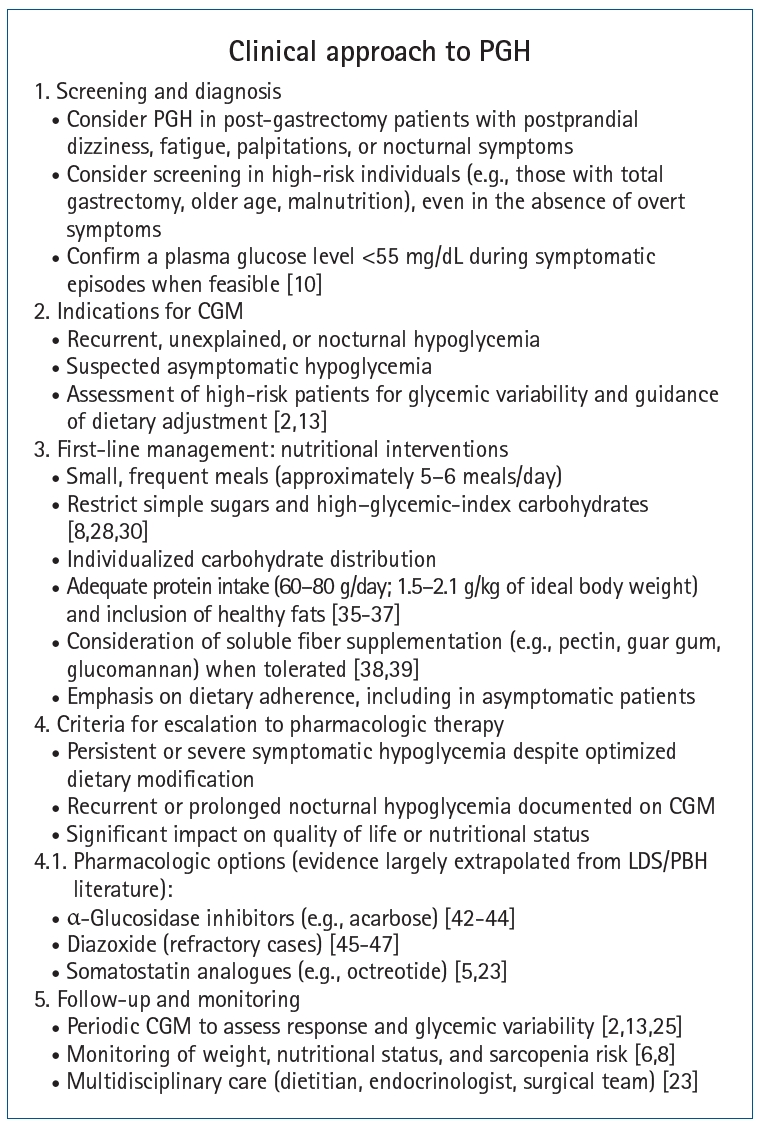
Practical clinical approach to postgastrectomy hypoglycemia (PGH) in gastric cancer patients. CGM, continuous glucose monitoring; LDS, late dumping syndrome.
Table 1.
Pathophysiological mechanisms and features potentially associated with postgastrectomy hypoglycemia
| Pathophysiological aspect | Key processes | Study design | Reference |
|---|---|---|---|
| Exaggerated incretin response (GLP-1, GIP, PYY) | Accelerated nutrient transit → particularly excessive GLP-1 secretion → disproportionate insulin secretion relative to glycemic load → hyperinsulinemic hypoglycemia | Clinical review, mechanistic review | [6,9,23] |
| Blunted autonomic counter-regulation after upper gastrointestinal surgery | Postoperative attenuation of catecholamine, cortisol, and sympathetic responses to hypoglycemia → may reduce symptom perception | Clinical review | [8,9] |
| Metabolic impairments | Hepatic glycogen depletion, sarcopenia, reduced gluconeogenesis, and malnutrition after total gastrectomy → increased vulnerability to nocturnal and prolonged hypoglycemia | Prospective study, retrospective study, cross-sectional observational study, review article | [6] |
| Inflammatory modulation | IL-1β secretion by macrophages in response to hyperglycemia → increased insulin release and reduced hypothalamic noradrenergic threshold → enhanced susceptibility to hypoglycemia | Clinical review | [9] |
| Intestinal adaptation (SGLT-1 upregulation) | Increased glucose absorption in the small intestine after gastrectomy due to mucosal adaptation → exacerbated glycemic variability | Prospective study, case report on PBH | [26,27] |
GLP-1, glucagon-like peptide-1; GIP, glucose-dependent insulinotropic polypeptide; PYY, peptide YY; IL, interleukin; SGLT-1, sodium-glucose cotransporter-1; PBH, post-bariatric hypoglycemia.
Note: Because postgastrectomy hypoglycemia-specific mechanistic studies are limited, some of the pathways listed above are drawn from studies of gastrointestinal surgery, including post-bariatric procedures and late dumping syndrome.
Table 2.
Dietary interventions potentially applicable to postgastrectomy hypoglycemia
| Strategy | Intervention/limitation | Study design | Reference |
|---|---|---|---|
| Dietary modification | Smaller, more frequent meals and low–glycemic-index/low-carbohydrate foods to reduce postprandial glycemic excursions. Pilot studies and PBH analogies suggest improvement in symptoms and glucose variability, but effectiveness varies and depends on patient adherence. | Prospective interventional study (pilot study), randomized crossover trial, prospective cohort study, prospective cohort (case series), prospective cohort study | [28-30] |
| Protein and fat intake adjustment | A total daily protein intake of 60–80 g, and 1.5–2.1 g/kg of ideal body weight; adequate dietary fat may slow carbohydrate absorption without stimulating insulin secretion. Careful meal planning is required. | Clinical practice guideline, expert opinion, guideline, narrative review, case series (small cohort study) | [35-37] |
| Soluble fiber supplementation | Pectin, glucomannan, and guar gum may be effective, particularly in pediatric patients, by slowing intestinal transit and delaying glucose absorption. Long-term use may be limited by palatability, availability, and preparation challenges. | Both interventional studies (small clinical trials) | [38,39] |
Table 3.
Pharmacological interventions potentially applicable to postgastrectomy hypoglycemia
| Agent | Mechanism | Evidence/limitation | Study design | Reference |
|---|---|---|---|---|
| α-Glucosidase inhibitors (e.g., acarbose) | Inhibit pancreatic α-amylase and intestinal α-glucosidases, thereby delaying glucose absorption | Reduce postprandial glucose excursions; considered a first-line pharmacologic option in LDS; may not prevent nocturnal hypoglycemia | Case report, narrative review, prospective interventional study | [42-44] |
| Diazoxide | Activates potassium channels → inhibits insulin release | Suggests efficacy in LDS; generally reserved for refractory cases | Review article, case report, multicenter observational cohort | [45-47] |
| Somatostatin analogues (e.g., octreotide) | Delay gastric emptying, slow small-bowel transit, inhibit gastrointestinal hormone release, and reduce insulin secretion | Effective for early dumping syndrome and LDS; administered as short-acting subcutaneous injections three times daily; multiple daily injections may limit adherence | Consensus statement, review article | [5,23] |
| SGLT-1/SGLT-2 inhibitors (e.g., canagliflozin) | Reduce intestinal glucose absorption through SGLT-1 → lower postprandial glucose and incretin responses | Preliminary PBH study showed reductions in glucose, insulin, and GLP-1 excursions; clinical evidence remains limited, and further investigation is needed | Case report, interventional clinical study/mechanistic trial | [27,49] |
- 1. Bray F, Ferlay J, Soerjomataram I, Siegel RL, Torre LA, Jemal A, et al. Global cancer statistics 2018: GLOBOCAN estimates of incidence and mortality worldwide for 36 cancers in 185 countries. CA Cancer J Clin 2018;68:394-424. ArticlePubMedPDF
- 2. Kubota T, Shoda K, Ushigome E, Kosuga T, Konishi H, Shiozaki A, et al. Utility of continuous glucose monitoring following gastrectomy. Gastric Cancer 2020;23:699-706. ArticlePubMedPDF
- 3. Ukleja A. Dumping syndrome: pathophysiology and treatment. Nutr Clin Pract 2005;20:517-25. ArticlePubMedPDF
- 4. Tack J, Arts J, Caenepeel P, De Wulf D, Bisschops R. Pathophysiology, diagnosis and management of postoperative dumping syndrome. Nat Rev Gastroenterol Hepatol 2009;6:583-90. ArticlePubMedPDF
- 5. Scarpellini E, Arts J, Karamanolis G, Laurenius A, Siquini W, Suzuki H, et al. International consensus on the diagnosis and management of dumping syndrome. Nat Rev Endocrinol 2020;16:448-66. ArticlePubMedPMCPDF
- 6. Kubota T, Yubakami M, Ushigome E, Ohashi T, Shoda K, Konishi H, et al. Persistent postgastrectomy hypoglycemia unawareness in patients with gastric cancer unveiled by a prospective study. Ann Surg Open 2022;3:e135. ArticlePubMedPMC
- 7. van Beek AP, Emous M, Laville M, Tack J. Dumping syndrome after esophageal, gastric or bariatric surgery: pathophysiology, diagnosis, and management. Obes Rev 2017;18:68-85. ArticlePubMedPDF
- 8. Nishibeppu K, Kubota T, Yubakami M, Ohashi T, Kiuchi J, Shimizu H, et al. Impact of hypoglycemia after gastrectomy on Global Leader Initiative on Malnutrition-defined malnutrition: a retrospective study. Surg Today 2024;54:743-50. ArticlePubMedPDF
- 9. Sheehan A, Patti ME. Hypoglycemia after upper gastrointestinal surgery: clinical approach to assessment, diagnosis, and treatment. Diabetes Metab Syndr Obes 2020;13:4469-82. ArticlePubMedPMC
- 10. Cryer PE, Axelrod L, Grossman AB, Heller SR, Montori VM, Seaquist ER, et al. Evaluation and management of adult hypoglycemic disorders: an Endocrine Society Clinical Practice Guideline. J Clin Endocrinol Metab 2009;94:709-28. ArticlePubMed
- 11. Eisenberg D, Azagury DE, Ghiassi S, Grover BT, Kim JJ. ASMBS position statement on postprandial hyperinsulinemic hypoglycemia after bariatric surgery. Surg Obes Relat Dis 2017;13:371-8. ArticlePubMed
- 12. Charles MA, Hofeldt F, Shackelford A, Waldeck N, Dodson LE, Bunker D, et al. Comparison of oral glucose tolerance tests and mixed meals in patients with apparent idiopathic postabsorptive hypoglycemia: absence of hypoglycemia after meals. Diabetes 1981;30:465-70. ArticlePubMedPDF
- 13. Ri M, Nunobe S, Ida S, Ishizuka N, Atsumi S, Makuuchi R, et al. Preliminary prospective study of real-time post-gastrectomy glycemic fluctuations during dumping symptoms using continuous glucose monitoring. World J Gastroenterol 2021;27:3386-95. ArticlePubMedPMC
- 14. Ri M, Nunobe S, Ida S, Ishizuka N, Atsumi S, Hayami M, et al. Postprandial asymptomatic glycemic fluctuations after gastrectomy for gastric cancer using continuous glucose monitoring device. J Gastric Cancer 2021;21:325-34. ArticlePubMedPMCPDF
- 15. Nusca A, Tuccinardi D, Albano M, Cavallaro C, Ricottini E, Manfrini S, et al. Glycemic variability in the development of cardiovascular complications in diabetes. Diabetes Metab Res Rev 2018;34:e3047. ArticlePubMedPDF
- 16. Pu Z, Lai L, Yang X, Wang Y, Dong P, Wang D, et al. Acute glycemic variability on admission predicts the prognosis in hospitalized patients with coronary artery disease: a meta-analysis. Endocrine 2020;67:526-34. ArticlePubMedPDF
- 17. Mehta HB, Mehta V, Goodwin JS. Association of hypoglycemia with subsequent dementia in older patients with type 2 diabetes mellitus. J Gerontol A Biol Sci Med Sci 2017;72:1110-6. ArticlePubMed
- 18. Shibamoto J, Kubota T, Ohashi T, Konishi H, Shiozaki A, Fujiwara H, et al. Glucose variability and predicted cardiovascular risk after gastrectomy. Surg Today 2022;52:1634-44. ArticlePubMedPDF
- 19. Chow E, Bernjak A, Williams S, Fawdry RA, Hibbert S, Freeman J, et al. Risk of cardiac arrhythmias during hypoglycemia in patients with type 2 diabetes and cardiovascular risk. Diabetes 2014;63:1738-47. ArticlePubMedPDF
- 20. Khan SG, Huda MS. Hypoglycemia and cardiac arrhythmia; mechanisms, evidence base and current recommendations. Curr Diabetes Rev 2017;13:590-7. ArticlePubMed
- 21. Ogama N, Sakurai T, Kawashima S, Tanikawa T, Tokuda H, Satake S, et al. Association of glucose fluctuations with sarcopenia in older adults with type 2 diabetes mellitus. J Clin Med 2019;8:319.ArticlePubMedPMC
- 22. Trierweiler H, Kisielewicz G, Hoffmann Jonasson T, Rasmussen Petterle R, Aguiar Moreira C, Zeghbi Cochenski Borba V, et al. Sarcopenia: a chronic complication of type 2 diabetes mellitus. Diabetol Metab Syndr 2018;10:25.ArticlePubMedPMCPDF
- 23. Tack J, Raymenants K, Van de Bruaene C, Scarpellini E. Dumping syndrome: update on pathophysiology, diagnosis, and management. Neurogastroenterol Motil 2025;37:e14962.Article
- 24. Danowitz M, De Leon DD. The role of GLP-1 signaling in hypoglycemia due to hyperinsulinism. Front Endocrinol (Lausanne) 2022;13:863184.Article
- 25. Banarer S, Cryer PE. Sleep-related hypoglycemia-associated autonomic failure in type 1 diabetes: reduced awakening from sleep during hypoglycemia. Diabetes 2003;52:1195-203.Article
- 26. Nguyen NQ, Debreceni TL, Bambrick JE, Chia B, Deane AM, Wittert G, et al. Upregulation of intestinal glucose transporters after Roux-en-Y gastric bypass to prevent carbohydrate malabsorption. Obesity (Silver Spring) 2014;22:2164-71. ArticlePubMedPDF
- 27. Bellastella G, Caruso P, Carbone C, di Nuzzo M, Scappaticcio L, Paglionico VA, et al. Case report: post-gastrectomy reactive hyperinsulinemic hypoglicaemia: glucose trends before and after canagliflozin treatment. Front Endocrinol (Lausanne) 2023;14:1193696.Article
- 28. Fanning M, Murphy CF, Elliott JA, Ravi N, Docherty NG, le Roux CW, et al. Continuous glucose monitoring and low-glycaemic index diet in the management of postprandial hypoglycaemia after oesophagogastric cancer surgery. Br J Surg 2024;111:znad371.ArticlePubMedPDF
- 29. Kubota T, Ohashi T, Nishibeppu K, Takabatake K, Inoue H, Nakabayashi Y, et al. Effectiveness of a low-glycaemic-index formula on post-gastrectomy hypoglycaemia in patients with gastric cancer: randomized crossover study. BJS Open 2025;9:zraf001.ArticlePDF
- 30. Kellogg TA, Bantle JP, Leslie DB, Redmond JB, Slusarek B, Swan T, et al. Postgastric bypass hyperinsulinemic hypoglycemia syndrome: characterization and response to a modified diet. Surg Obes Relat Dis 2008;4:492-9. Article
- 31. Hanaire H, Bertrand M, Guerci B, Anduze Y, Guillaume E, Ritz P, et al. High glycemic variability assessed by continuous glucose monitoring after surgical treatment of obesity by gastric bypass. Diabetes Technol Ther 2011;13:625-30. ArticlePDF
- 32. van Meijeren J, Timmer I, Brandts H, Janssen I, Boer H. Evaluation of carbohydrate restriction as primary treatment for post-gastric bypass hypoglycemia. Surg Obes Relat Dis 2017;13:404-10. Article
- 33. Heber D, Greenway FL, Kaplan LM, Livingston E, Salvador J, Still C, et al. Endocrine and nutritional management of the post-bariatric surgery patient: an Endocrine Society Clinical Practice Guideline. J Clin Endocrinol Metab 2010;95:4823-43. ArticlePubMedPDF
- 34. Moize VL, Pi-Sunyer X, Mochari H, Vidal J. Nutritional pyramid for post-gastric bypass patients. Obes Surg 2010;20:1133-41. ArticlePDF
- 35. Allied Health Sciences Section Ad Hoc Nutrition Committee, Aills L, Blankenship J, Buffington C, Furtado M, Parrott J. ASMBS allied health nutritional guidelines for the surgical weight loss patient. Surg Obes Relat Dis 2008;4:S73-108. Article
- 36. Faria SL, Faria OP, Buffington C, de Almeida Cardeal M, Ito MK. Dietary protein intake and bariatric surgery patients: a review. Obes Surg 2011;21:1798-805. ArticlePDF
- 37. McLaughlin T, Peck M, Holst J, Deacon C. Reversible hyperinsulinemic hypoglycemia after gastric bypass: a consequence of altered nutrient delivery. J Clin Endocrinol Metab 2010;95:1851-5. Article
- 38. Jenkins DJ, Gassull MA, Leeds AR, Metz G, Dilawari JB, Slavin B, et al. Effect of dietary fiber on complications of gastric surgery: prevention of postprandial hypoglycemia by pectin. Gastroenterology 1977;73:215-7. Article
- 39. Kneepkens CM, Fernandes J, Vonk RJ. Dumping syndrome in children: diagnosis and effect of glucomannan on glucose tolerance and absorption. Acta Paediatr Scand 1988;77:279-86.Article
- 40. Fujita Y, Tamada D, Kozawa J, Kobayashi Y, Sasaki S, Kitamura T, et al. Successful treatment of reactive hypoglycemia secondary to late dumping syndrome using miglitol. Intern Med 2012;51:2581-5. Article
- 41. Hirose S, Iwahashi Y, Seo A, Sumiyoshi M, Takahashi T, Tamori Y, et al. Concurrent therapy with a low-carbohydrate diet and miglitol remarkably improved the postprandial blood glucose and insulin levels in a patient with reactive hypoglycemia due to late dumping syndrome. Intern Med 2016;55:1137-42. Article
- 42. Sivakumar T, Sivakumar S, Chaychi L, Comi R. A review of the use of acarbose for the treatment of post-prandial syndrome (reactive hypoglycemia). Endocrinol Metab Syndr 2012;S1:010.Article
- 43. Ohrstrom CC, Worm D, Hojager A, Andersen D, Holst JJ, Kielgast UL, et al. Postprandial hypoglycaemia after Roux-en-Y gastric bypass and the effects of acarbose, sitagliptin, verapamil, liraglutide and pasireotide. Diabetes Obes Metab 2019;21:2142-51.Article
- 44. Son H, Lee BH, Cho YM. Theragnostic utility of continuous glucose monitoring in post-gastrectomy hypoglycemia. J Diabetes Investig 2024;15:1696-9. Article
- 45. Patti ME, McMahon G, Mun EC, Bitton A, Holst JJ, Goldsmith J, et al. Severe hypoglycaemia post-gastric bypass requiring partial pancreatectomy: evidence for inappropriate insulin secretion and pancreatic islet hyperplasia. Diabetologia 2005;48:2236-40.Article
- 46. Thondam SK, Nair S, Wile D, Gill GV. Diazoxide for the treatment of hypoglycaemic dumping syndrome. QJM 2013;106:855-8. ArticlePubMed
- 47. Vilarrasa N, Goday A, Rubio MA, Caixas A, Pellitero S, Ciudin A, et al. Hyperinsulinemic hypoglycemia after bariatric surgery: diagnosis and management experience from a Spanish multicenter registry. Obes Facts 2016;9:41-51. ArticlePubMedPMCPDF
- 48. Rossini G, Risi R, Monte L, Sancetta B, Quadrini M, Ugoccioni M, et al. Postbariatric surgery hypoglycemia: nutritional, pharmacological and surgical perspectives. Diabetes Metab Res Rev 2024;40:e3750.Article
- 49. Martinussen C, Veedfald S, Dirksen C, Bojsen-Moller KN, Svane MS, Wewer Albrechtsen NJ, et al. The effect of acute dual SGLT1/SGLT2 inhibition on incretin release and glucose metabolism after gastric bypass surgery. Am J Physiol Endocrinol Metab 2020;318:E956-64. Article
References
Figure & Data
REFERENCES
Citations
Citations to this article as recorded by 
 Cite
Cite XML Download
- Figure
-
Mechanistic insights, clinical significance, and management strategies for postgastrectomy hypoglycemia in gastric cancer patients in the era of continuous glucose monitoring: a narrative review
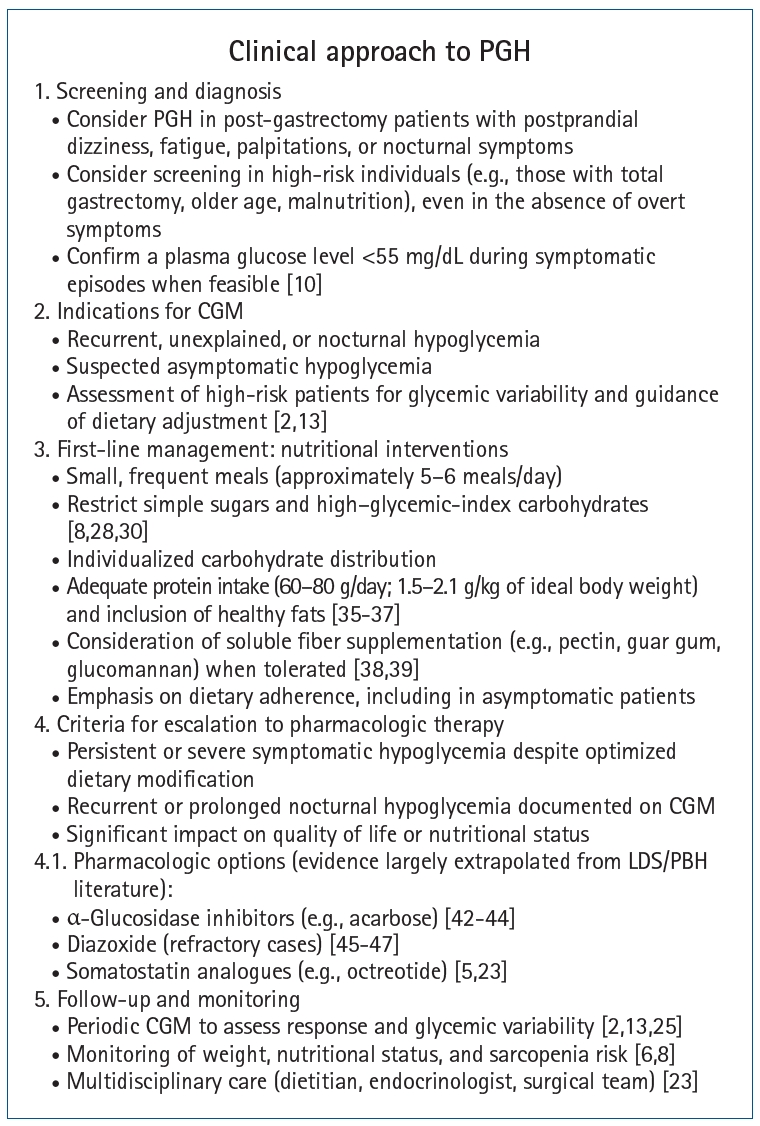
Fig. 1. Practical clinical approach to postgastrectomy hypoglycemia (PGH) in gastric cancer patients. CGM, continuous glucose monitoring; LDS, late dumping syndrome.
Fig. 1.
Mechanistic insights, clinical significance, and management strategies for postgastrectomy hypoglycemia in gastric cancer patients in the era of continuous glucose monitoring: a narrative review
| Pathophysiological aspect | Key processes | Study design | Reference |
|---|---|---|---|
| Exaggerated incretin response (GLP-1, GIP, PYY) | Accelerated nutrient transit → particularly excessive GLP-1 secretion → disproportionate insulin secretion relative to glycemic load → hyperinsulinemic hypoglycemia | Clinical review, mechanistic review | [6,9,23] |
| Blunted autonomic counter-regulation after upper gastrointestinal surgery | Postoperative attenuation of catecholamine, cortisol, and sympathetic responses to hypoglycemia → may reduce symptom perception | Clinical review | [8,9] |
| Metabolic impairments | Hepatic glycogen depletion, sarcopenia, reduced gluconeogenesis, and malnutrition after total gastrectomy → increased vulnerability to nocturnal and prolonged hypoglycemia | Prospective study, retrospective study, cross-sectional observational study, review article | [6] |
| Inflammatory modulation | IL-1β secretion by macrophages in response to hyperglycemia → increased insulin release and reduced hypothalamic noradrenergic threshold → enhanced susceptibility to hypoglycemia | Clinical review | [9] |
| Intestinal adaptation (SGLT-1 upregulation) | Increased glucose absorption in the small intestine after gastrectomy due to mucosal adaptation → exacerbated glycemic variability | Prospective study, case report on PBH | [26,27] |
| Strategy | Intervention/limitation | Study design | Reference |
|---|---|---|---|
| Dietary modification | Smaller, more frequent meals and low–glycemic-index/low-carbohydrate foods to reduce postprandial glycemic excursions. Pilot studies and PBH analogies suggest improvement in symptoms and glucose variability, but effectiveness varies and depends on patient adherence. | Prospective interventional study (pilot study), randomized crossover trial, prospective cohort study, prospective cohort (case series), prospective cohort study | [28-30] |
| Protein and fat intake adjustment | A total daily protein intake of 60–80 g, and 1.5–2.1 g/kg of ideal body weight; adequate dietary fat may slow carbohydrate absorption without stimulating insulin secretion. Careful meal planning is required. | Clinical practice guideline, expert opinion, guideline, narrative review, case series (small cohort study) | [35-37] |
| Soluble fiber supplementation | Pectin, glucomannan, and guar gum may be effective, particularly in pediatric patients, by slowing intestinal transit and delaying glucose absorption. Long-term use may be limited by palatability, availability, and preparation challenges. | Both interventional studies (small clinical trials) | [38,39] |
| Agent | Mechanism | Evidence/limitation | Study design | Reference |
|---|---|---|---|---|
| α-Glucosidase inhibitors (e.g., acarbose) | Inhibit pancreatic α-amylase and intestinal α-glucosidases, thereby delaying glucose absorption | Reduce postprandial glucose excursions; considered a first-line pharmacologic option in LDS; may not prevent nocturnal hypoglycemia | Case report, narrative review, prospective interventional study | [42-44] |
| Diazoxide | Activates potassium channels → inhibits insulin release | Suggests efficacy in LDS; generally reserved for refractory cases | Review article, case report, multicenter observational cohort | [45-47] |
| Somatostatin analogues (e.g., octreotide) | Delay gastric emptying, slow small-bowel transit, inhibit gastrointestinal hormone release, and reduce insulin secretion | Effective for early dumping syndrome and LDS; administered as short-acting subcutaneous injections three times daily; multiple daily injections may limit adherence | Consensus statement, review article | [5,23] |
| SGLT-1/SGLT-2 inhibitors (e.g., canagliflozin) | Reduce intestinal glucose absorption through SGLT-1 → lower postprandial glucose and incretin responses | Preliminary PBH study showed reductions in glucose, insulin, and GLP-1 excursions; clinical evidence remains limited, and further investigation is needed | Case report, interventional clinical study/mechanistic trial | [27,49] |
Table 1. Pathophysiological mechanisms and features potentially associated with postgastrectomy hypoglycemia
GLP-1, glucagon-like peptide-1; GIP, glucose-dependent insulinotropic polypeptide; PYY, peptide YY; IL, interleukin; SGLT-1, sodium-glucose cotransporter-1; PBH, post-bariatric hypoglycemia. Note: Because postgastrectomy hypoglycemia-specific mechanistic studies are limited, some of the pathways listed above are drawn from studies of gastrointestinal surgery, including post-bariatric procedures and late dumping syndrome.
Table 2. Dietary interventions potentially applicable to postgastrectomy hypoglycemia
PBH, post-bariatric hypoglycemia. Note: Most strategies listed here are adapted from studies of late dumping syndrome and postprandial hypoglycemia after gastrointestinal surgery, including post-bariatric procedures, because postgastrectomy hypoglycemia-specific evidence remains limited.
Table 3. Pharmacological interventions potentially applicable to postgastrectomy hypoglycemia
LDS, late dumping syndrome; SGLT-1/SGLT-2, sodium-glucose cotransporter 1 and 2; PBH, post-bariatric hypoglycemia; GLP-1, glucagon-like peptide-1. Note: Most approaches described here are adapted from evidence in LDS and PBH, as postgastrectomy hypoglycemia-specific trials are scarce.


